

Walk into any konbini in Japan this month and the shelves turn purple, orange and brown. That is autumn. Sweet potato and chestnut take over everything: bread, cake, ice cream, even the onigiri. Japanese people treat this as a real season, and they eat their way through it on purpose.
This is a short guide to what is on the shelves right now, what each thing costs, and what to point at when you cannot read the label.
Sweet potato is the star
The word to know is imo (芋), sweet potato. Most of the sweet potato products this season use a variety called Beni Haruka (紅はるか). It is known for being soft and sweet, and FamilyMart packs its sweet potato line in purple.
FamilyMart runs the biggest campaign. Its “Oimo Shukakusai” (おいも収穫祭, sweet potato harvest festival) line launched on 22 September with 14 products in about 16,500 stores. Three of them are regular items and the other eleven are limited quantity, so some may already be gone when you arrive. Prices are tax included:
Caramel sweet potato croissant (キャラメル香るおいものクロワッサン): ¥185
Mochi sweet potato bread (もっちおいもパン): ¥185
Sweet potato sticks, six in a pack (さつまいもスティック): ¥180
Beni Haruka yaki-imo monaka, an ice cream sandwich shaped like a roasted sweet potato (紅はるかの焼いも最中): ¥225
Taberu Bokujo yaki-imo, a cup ice cream with milk ice on top and sweet potato ice below (たべる牧場やきいも): ¥278
Sweet potato and cheese pizza sandwich (ピザサンド さつまいもチーズ): ¥330
Caramel sweet potato chips (おいもチップス キャラメル味): ¥248
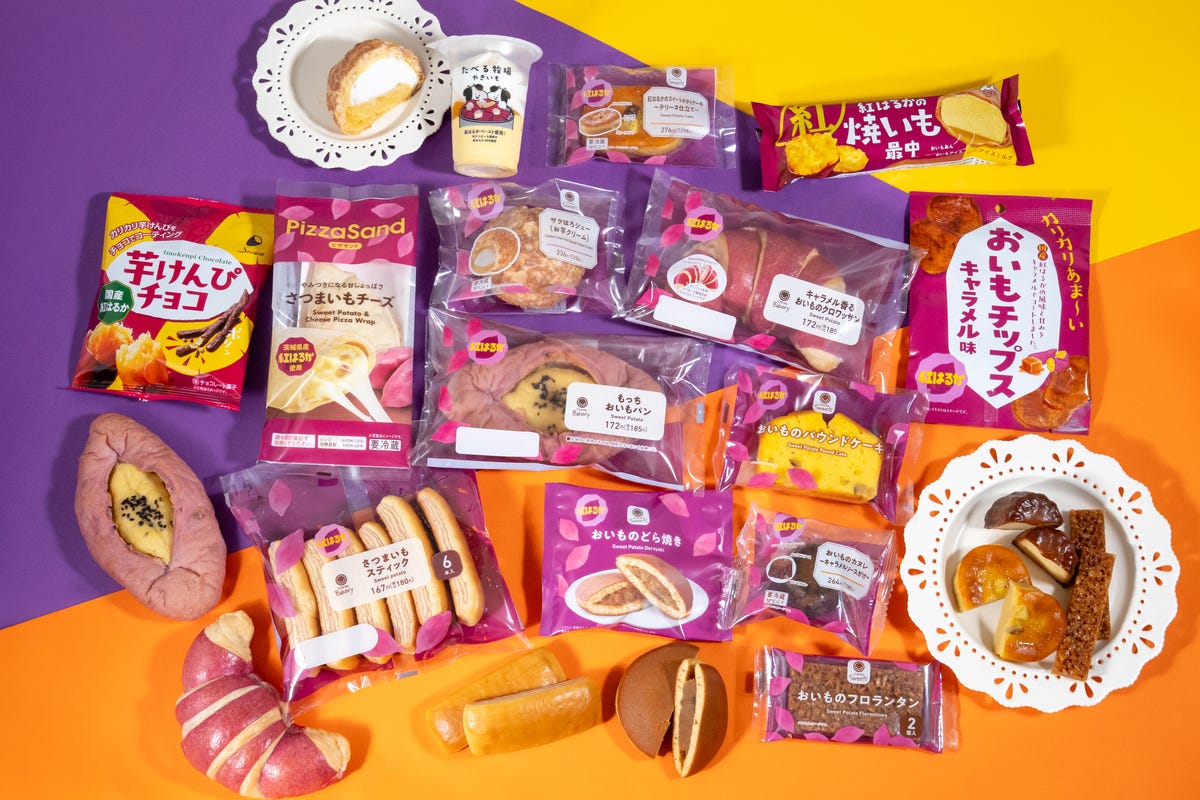
Image: FamilyMart official press release
If you only try one, make it the monaka. It is shaped like a roasted sweet potato, with sweet potato ice cream and sweet potato paste inside, and it is easy to eat standing outside the store.
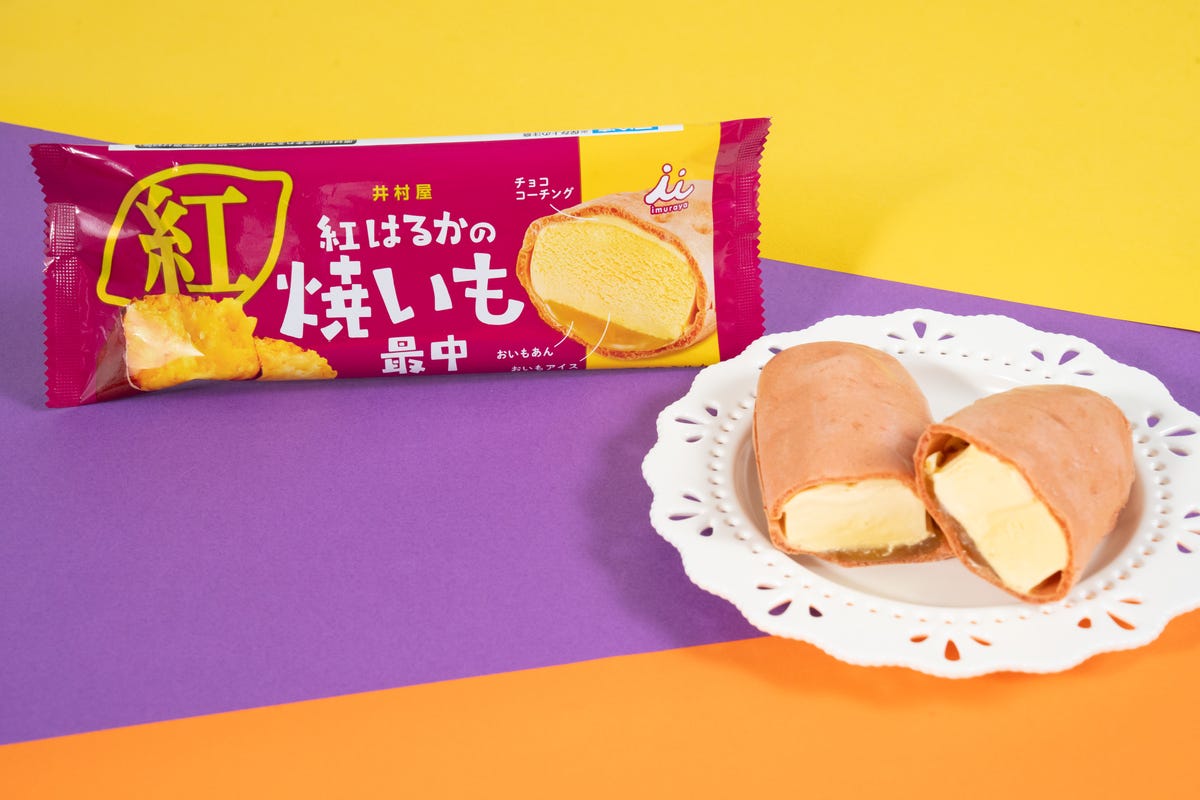
Image: FamilyMart official press release
Chestnut is the quiet second
Chestnut is kuri (栗). 7-Eleven built a chestnut line this autumn: a premium Mont Blanc cake (ご褒美モンブラン) at about ¥378, a chestnut cream daifuku (マロンクリーム大福) at about ¥172, and a chestnut and sesame rice onigiri (栗の炊き込みご飯おむすび) at ¥198 before tax, ¥213.84 with tax.
The onigiri is the most meal-like of the three: pieces of chestnut cooked into the rice, with black sesame. Ask the staff to warm it up. The label says it tastes best warm (温めておいしい), and the counter staff will heat it in the microwave for you.
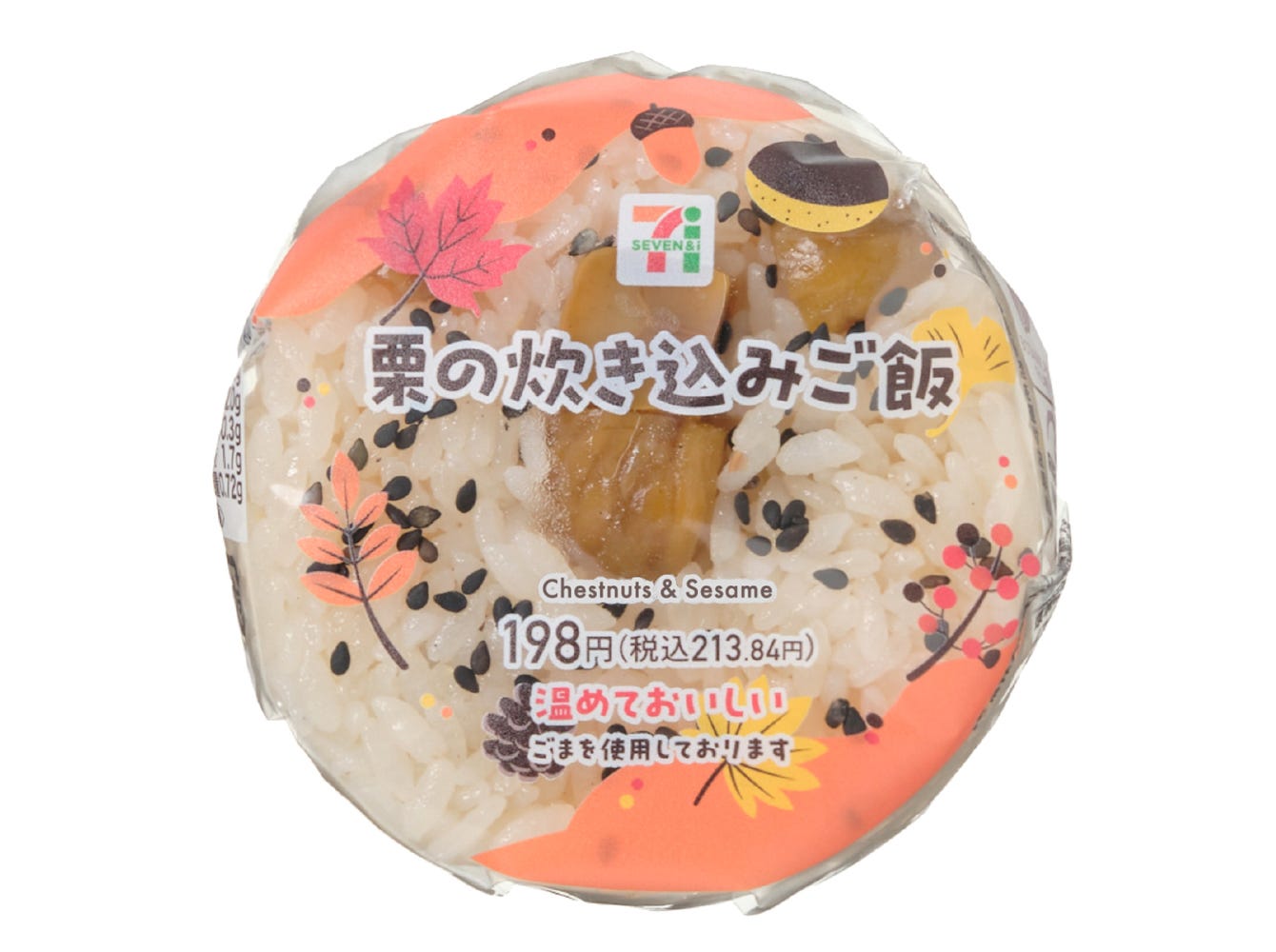
Image: 7-Eleven Japan official product page
Outside the konbini, chestnut shows up in wagashi shops and bakeries, and in kuri-manju, a small chestnut bun sold at festival stalls.
The real thing: yaki-imo
Konbini products are copies of one thing: yaki-imo (焼き芋), a whole sweet potato roasted slowly until the inside turns to syrup. You will find it at supermarkets, at some konbini, at Don Quijote and from trucks that drive around neighborhoods with a recorded call. The trucks are the most expensive way to buy one and the most fun. Break it in half, eat it with the skin on, and do it while it is still hot.
Rice season too
New rice (shinmai, 新米) arrives from September through December. Supermarkets and restaurants mark it with signs, and it is a good season to eat plain rice, onigiri and set meals.
This autumn there is also a national contest around it. The Gotochi Onigiri Grand Prix 2026 runs from 1 October to 30 November, organized by Zen-Noh and Gurunavi. A hundred and sixty restaurants across Japan are serving 453 original onigiri built around regional food. You can see the list on the official site (onigirifair2026.ricesmile.jp), and the winner is chosen by public vote with results expected in early December.
Also in season
Persimmon (kaki, 柿): sold at greengrocers, supermarkets and roadside boxes.
Ginkgo nuts (ginnan, 銀杏): skewered at yakitori and izakaya places, and at festival stalls.
Grilled sanma (秋刀魚): Pacific saury, a teishoku staple, and usually inexpensive.
Apples (りんご): October to December, best from Aomori.
A shopping list you can show the staff
さつまいも (satsumaimo): sweet potato
栗 (kuri): chestnut
新米 (shinmai): new rice
温めてください (atatamete kudasai): please warm it up
紅はるか (Beni Haruka): the sweet potato variety named on FamilyMart’s purple packs
What to know before you go
Seasonal lines rotate every few weeks, and limited-quantity items sell out. Treat this list as a map of what to look for. The pattern holds in every chain: look for the words imo and kuri on the front of the pack.
Last checked on 4 November 2026.
Kaz